Quick Summary
Eco-friendly laundry service NYC residents can rely on goes beyond a marketing label. United Laundré uses energy-efficient, American-made machines and cleaning methods matched to each fabric and stain, reducing unnecessary chemical and water use compared to traditional dry cleaning. This approach responds directly to documented environmental and health concerns tied to harsh dry cleaning solvents. The result is a process that gets clothes and linens just as clean as a traditional cleaner, with a 98.7 percent next-day turnaround on standard orders.
Plenty of laundry companies use the word “eco-friendly” in their marketing without explaining what it actually means for how clothes get cleaned. An eco-friendly laundry service NYC residents can trust should be able to answer a simple question directly: what is different about the chemicals, equipment, and process compared to a standard dry cleaner?
Our approach centers on energy-efficient, American-made machines and cleaning methods designed to reduce unnecessary chemical use and resource waste, without compromising on how thoroughly stains, odors, and dirt are removed.
This matters for more than marketing reasons. Traditional dry cleaning has a documented environmental and health footprint, and understanding what a service actually does differently is the only way to evaluate whether an eco-friendly claim holds up.
The Problem With Traditional Dry Cleaning Chemicals
For decades, the dry cleaning industry has relied heavily on a solvent called perchloroethylene, commonly known as perc or PCE, to clean garments that cannot go through a standard wash cycle.
The U.S. Environmental Protection Agency has spent years developing regulations to reduce PCE emissions, citing measurable health and environmental concerns tied to the chemical, including its impact on air and water quality near facilities that use it.
Regulatory action has continued to tighten around PCE specifically because of these concerns, with rules aimed at phasing the solvent out of consumer and commercial use over time. This is not a fringe concern.
What Our Eco-Friendly Process Actually Involves
Rather than defaulting to harsh solvents for every garment, our process is built around responsible cleaning methods matched to the fabric and the stain, using effective detergents that break down dirt, oils, and odors without relying on unnecessary chemical volume.
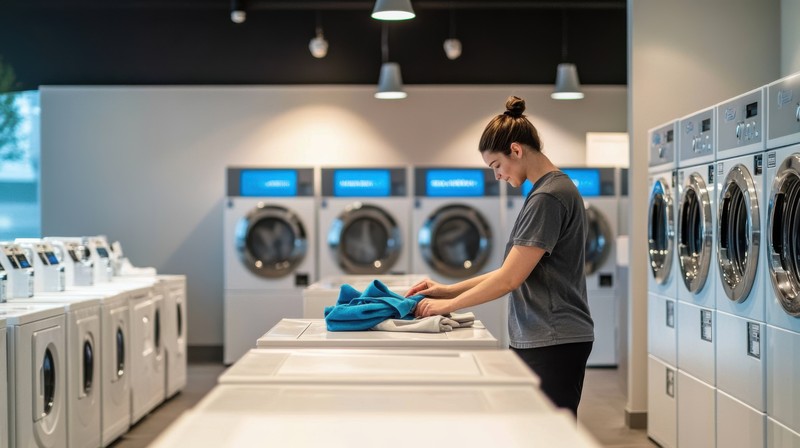
The equipment behind a laundry service matters just as much as the cleaning agents used in it. We operate commercial-grade, American-made washers and dryers selected specifically for energy efficiency, which reduces both the electricity and water required to process each load compared to older or less efficient machines. Equipment quality also affects consistency.
Machines that are well-maintained and properly calibrated clean more evenly on the first cycle, which reduces the need for a repeat wash and the additional resources that would require.
Reducing Water and Detergent Waste Without Sacrificing Results
Water and detergent waste are two of the most overlooked parts of the laundry industry’s environmental footprint. Overloading machines, running unnecessary rewashes, or defaulting to maximum detergent amounts regardless of load size all add up across an operation that processes as much volume as a commercial laundry service does.
We calibrate detergent use to load size and fabric type rather than applying a flat measurement to every order, and our equipment is chosen specifically to minimize water use per cycle without shortening wash time or reducing cleaning quality.
Why Eco-Friendly Does Not Mean Less Effective
A common assumption is that eco-friendly cleaning must be a gentler, less thorough process than traditional methods. In practice, the opposite is often true. Overusing harsh solvents does not necessarily clean better. It simply increases chemical exposure and environmental impact without a proportional improvement in results.
Our process is built to remove stains, dirt, and odors just as effectively as a traditional dry cleaner, using targeted treatment and well-maintained equipment rather than relying on the sheer volume of chemical agents used per load.
With a 98.7 percent next-day turnaround rate on standard orders, effectiveness and efficiency are not competing priorities in how we operate.
How Fabric-Specific Treatment Reduces Environmental Impact
Treating every garment with the same generic process is one of the quieter sources of waste in the laundry industry. A cotton t-shirt, a wool coat, and a silk blouse do not need the same water temperature, cycle length, or chemical treatment, yet many cleaners default to a single standardized process regardless of fabric.
Matching treatment to fabric type means using only the water, energy, and cleaning agents that a specific item actually requires, rather than over-processing simpler items or under-treating more delicate ones.
This approach also protects the lifespan of your clothing, since garments that are not exposed to unnecessary heat or chemical treatment tend to hold their color, shape, and fiber integrity longer, which reduces the frequency of replacement over time.
What This Means for Delicate and Specialty Items
Delicate items such as cashmere, silk, and structured garments benefit the most from a fabric-specific eco-friendly process, since they are also the items most easily damaged by an aggressive one-size-fits-all approach.
These pieces are inspected individually, cleaned using methods suited to their specific material, and pressed by hand where a mechanical press would risk flattening texture or structure. The same principle applies to specialty items like duvets, pillows, and blankets, which require different handling than everyday clothing but should not require a separate trip to a specialty cleaner.
Bringing this level of care to bulkier and more delicate items under one eco-friendly process is part of what makes the approach practical for everyday use, not just for occasional special-occasion garments.
What Customers Can Do to Support a Greener Laundry Cycle
An eco-friendly laundry process works best as a partnership rather than something a service handles entirely on its own. Sorting items reasonably before a scheduled pickup and delivery, flagging any garment that needs special attention, and choosing a full load rather than sending in just one or two items when possible all help reduce the number of cycles required to process an order.
None of this requires extra effort on your part beyond normal common sense, but it does mean that an eco-friendly laundry service delivers its full benefit only when pickup habits work with the process rather than against it. We are always happy to advise customers on how to get the most out of their service, both for the environment and for the condition of their garments over time.
Curious what an eco-friendly, effective laundry process looks like in practice? Contact us to schedule a pickup and see the difference for yourself.
Frequently Asked Questions
Does eco-friendly cleaning work as well as traditional dry cleaning?
Yes. Our process is designed to remove stains, dirt, and odors just as effectively as traditional methods, using targeted treatment rather than a one-size-fits-all approach.
Does eco-friendly processing take longer than standard cleaning?
No. Our standard turnaround remains fast, with 98.7 percent of orders delivered the next day, so choosing an eco-friendly process does not mean sacrificing speed.
Is eco-friendly laundry service more expensive?
Our pricing is based on service type and order volume rather than an added premium for eco-friendly processing, since responsible cleaning is simply built into how we operate.